
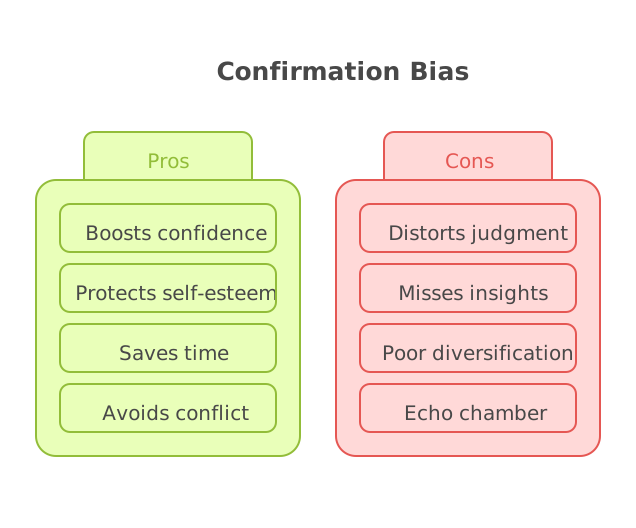
Have you ever caught yourself focusing only on news that matches your views? Or seeking advice that supports a money decision you’ve already made? That’s confirmation bias at work—a common mental shortcut that makes us favor information that confirms what we believe while quietly dismissing anything that challenges it. It’s a natural and even comforting tendency, but it can subtly distort our judgment in both life and finance.
What is Confirmation Bias?
Confirmation bias is a simple idea with a fancy name: we tend to see what we want to see. We notice and trust information that supports our existing beliefs, while ignoring or minimizing anything that challenges them. Psychologists classify it as a cognitive bias—in everyday terms, it’s our brain’s habit of cherry‑picking facts. For example, if you’re certain a particular stock is a winner, you might focus only on glowing headlines and positive reports, while brushing past any negative analysis entirely.
This bias often occurs without us even noticing. Once we form an opinion, our mind instinctively searches for evidence to confirm it—like having a friendly inner voice that keeps whispering, “You’re right,” even when you might not be. While this tendency can boost confidence, it can also prevent us from seeing the full picture.

Why Do We Seek Confirmation?
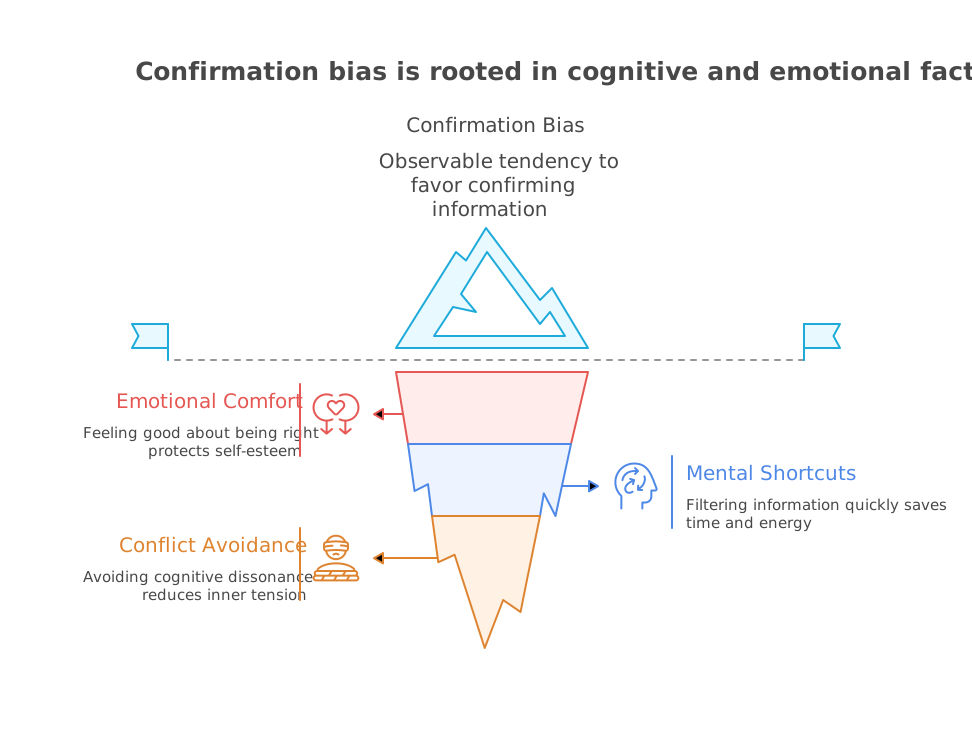
Why do smart people still fall into the trap of confirmation bias? The answer lies in how our brains manage information and safeguard our emotions. It simply feels good to be right. Few of us enjoy discovering we were wrong—especially about something that matters. Our egos naturally resist that sting to our pride. By zeroing in on evidence that supports our existing beliefs, we’re really protecting our self-esteem. It’s our mind’s way of giving us a quiet pat on the back and sidestepping the discomfort of being proven wrong.
Second, our brains are naturally wired to take mental shortcuts. In today’s world of constant information overload, it’s impossible to analyze every detail with perfect logic. To save time and energy, our minds filter information quickly, favoring details that confirm what we already believe. This instinct once served our ancestors well: If a hunter believed a rustle in the bushes meant “predator,” it was safer to focus on evidence that confirmed danger. Acting quickly on that belief — even if sometimes wrong — could prevent becoming prey.While this confirmation bias improved survival by tilting decisions toward caution, it comes with a cost. By screening out so much “noise,” we also risk missing valuable insights that could challenge and expand our understanding.
Another reason is avoiding conflict and stress. Hearing information that clashes with our beliefs creates an inner tension known as cognitive dissonance. It’s that uncomfortable feeling when reality doesn’t line up with our expectations. To dodge that discomfort, we often stick our heads in the sand of agreeable information. For instance, suppose you believe your investment strategy is perfect. If you start seeing data that suggests otherwise, it can cause stress. To avoid that feeling, you might simply stop looking at the conflicting information.
Real-Life Examples of Confirmation Bias
Confirmation bias isn’t just a finance or psychology buzzword – it shows up in everyday life in relatable ways.
In Personal Life & Relationships
Think back to the early days of a new relationship. When you’re swept up in excitement, you tend to see the other person through rose-colored glasses—focusing on every sweet gesture and positive trait that reinforces the belief, “This person is amazing.”
After a painful breakup, the lens flips. Suddenly, the flaws and frustrating moments take center stage, and you may even wonder, “How did I miss those red flags?” The truth is, they were likely there all along. When you were infatuated, your mind filtered in the good and filtered out the bad. Once things ended, you did the reverse—spotlighting the negative to validate that the breakup was the right choice.
In both cases, your brain was cherry-picking memories to match the emotions you felt in the moment.
Confirmation bias also appears in friendships and personal beliefs. If you firmly believe a certain diet is the healthiest, you’ll likely read only things that support that belief. It’s not that you’re doing this on purpose. Your mind is just selectively gathering “evidence” for what you want to believe.
In Marketing and Brand Loyalty
Ever wonder why companies pour millions into creating a dazzling first impression for a new product? It’s because they understand confirmation bias. Win someone over early, and their mind often takes care of the rest.
If your first impression is that Brand X makes the best smartphones, you’ll naturally notice every glowing review or clever ad that supports that belief. Each positive piece of information strengthens your conviction that you chose the superior product. And when a friend points out a flaw in the latest model? You might dismiss it as a one-off. Instead of weighing all the evidence, you’ll seek out details that confirm how great Brand X is — and quietly tune out the critics.
This is confirmation bias in the consumer world. In reality, all brands have pros and cons. Our bias, however, makes us focus only on evidence that supports “our team.” Companies love this phenomenon, of course. Once you’re loyal, you might even pay a premium for a product because you’re convinced it’s the best. You’ll likely stick with that belief unless something huge proves you wrong.
There’s a cost to being blindly brand-loyal, though. If you never consider alternatives, you might miss out on something better. Yet many of us will happily gloss over negative reviews of a product we already love. We do this just to keep believing we made the right choice.
In News and Information
News and search platforms frequently amplify confirmation bias—and it’s no accident. Their business models thrive on capturing your attention. The longer you stay, click, and scroll, the more ads you see—and the more revenue they earn. To keep you engaged, algorithms study what you already like and serve up more of the same.
Say you search “best investments right now.” If you’ve previously clicked on optimistic takes, the platform will likely show you upbeat stories first. Soon, your feed is filled with similar content, reinforcing the idea that markets are thriving—while articles warning of potential risks get buried out of sight.
In today’s media environment, it’s easier than ever to settle into a comfortable bubble of like-minded information. We follow channels, accounts, and communities that align with our views, and unfollow anything that challenges them. This creates an echo chamber—a stream of content that constantly tells you “you’re right” and rarely urges, “consider another perspective.”
This pattern is another everyday display of confirmation bias. Two people with opposite viewpoints can read the same news story but walk away with totally different interpretations. Each will see the facts that confirm their stance. It’s comfortable to consume agreeable news, but it can also distort our understanding. We might become overconfident in our views. Or we grow too skeptical of any information that isn’t aligned with what we “know” to be true.
Confirmation Bias in Financial Decisions
Nowhere is confirmation bias more dangerous than in money matters. Wealthy individuals and seasoned investors aren’t immune to this bias. In fact, it can be even trickier for them because the stakes feel high and emotions run strong.
How do investors miss the obvious?
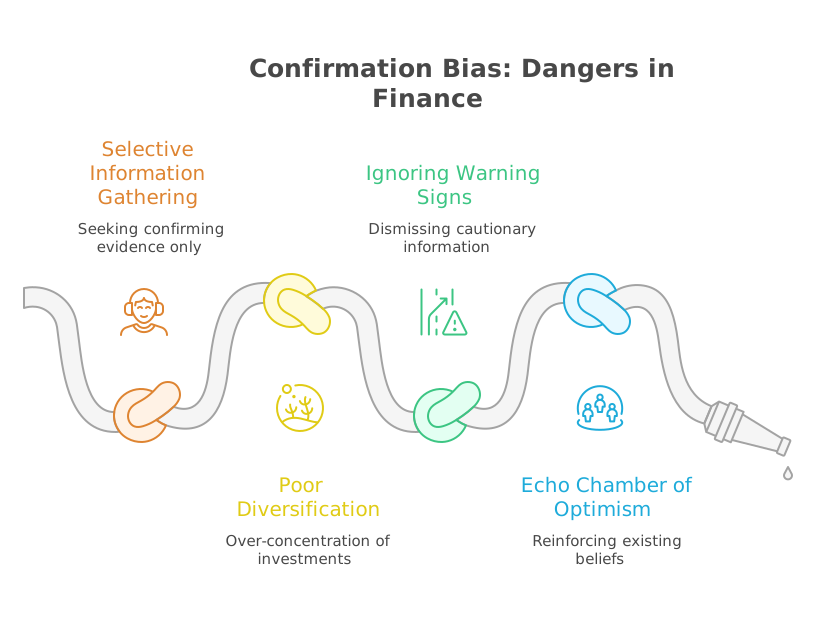
Imagine an investor who’s convinced that a certain stock is a guaranteed winner. He did some initial research and the stock went up, bolstering his confidence. From then on, he eagerly seeks out positive news about that company – new product launches, upbeat earnings reports, etc. Essentially, he latches onto anything that confirms his belief that he made a great pick. At the same time, if a headline hints at trouble, he might skim past it. He could dismiss bad news as “just short-term noise.” This investor may even join online forums where everyone else is optimistic about the stock. That habit further amplifies the one-sided optimism.
What’s the harm in this? He could ignore warning signs that his investment is riskier than he thinks. If the company starts slipping, he might hold on too long because he’s only paying attention to the rosy predictions. Many investors have fallen into this trap of selective hearing – celebrating the wins they expected and tuning out hints of losses. It’s why a friend at a dinner party might brag about that one stock that doubled in value. Yet they conveniently won’t mention the five other picks that sank. In the bragger’s mind, he focuses on information that says, “I’m a savvy investor.” He brushes aside anything that suggests otherwise.
Impact on well-grounded principles such as diversification
Confirmation bias can also lead to poor diversification. If you’re convinced you’ve found the “best” investment, you might pour most of your money into it. By ignoring contrarian viewpoints, you risk going all in on a single idea. That can backfire if the idea turns out to be wrong. We’ve seen cases where investors rode a hype wave and ignored voices of caution. In the end, they faced heavy losses when the hype fizzled. Oftentimes those cautionary voices were there. But confirmation bias made them easy to ignore, because they didn’t fit the success story we wanted to believe.
Case Study: The SPAC Craze
A striking example of confirmation bias in recent years came during the SPAC boom. Special Purpose Acquisition Companies — or “blank check firms” — promised quick paths for private companies to go public. In 2020 and 2021, excitement about electric vehicles, biotech, and futuristic tech fueled a rush of deals.
Many investors focused only on the rosy projections and upbeat press releases. They ignored warning signs like weak balance sheets, unrealistic growth targets, or complex share structures. For a time, prices surged, and early stories of big wins circulated widely. That reinforced the belief that “SPACs are the future.”
But as reality set in, many companies faltered. Share prices collapsed, and some firms went bankrupt or liquidated. Individuals who had invested large sums — sometimes well into six figures or more — saw their stakes shrink dramatically. What made the pain worse was that many investors had dismissed cautionary voices. Confirmation bias made them believe only the bullish narratives.
The SPAC cycle shows how even sophisticated investors can get caught in an echo chamber of optimism. It’s a reminder that in finance, chasing only the evidence that tells you what you want to hear can be costly.
In short, confirmation bias can cloud judgment for even the wealthiest and smartest individuals. It can make markets seem less risky than they really are. It can even convince someone that their financial plan is foolproof when it actually has holes. Being aware of this bias is vital for anyone making big money decisions.
Overcoming Confirmation Bias
The good news is that once you know about confirmation bias, you can fight back against it. You may not eliminate this bias entirely – we’re all human. But you can certainly reduce its impact on your choices. Here are some strategies to help keep your thinking objective:
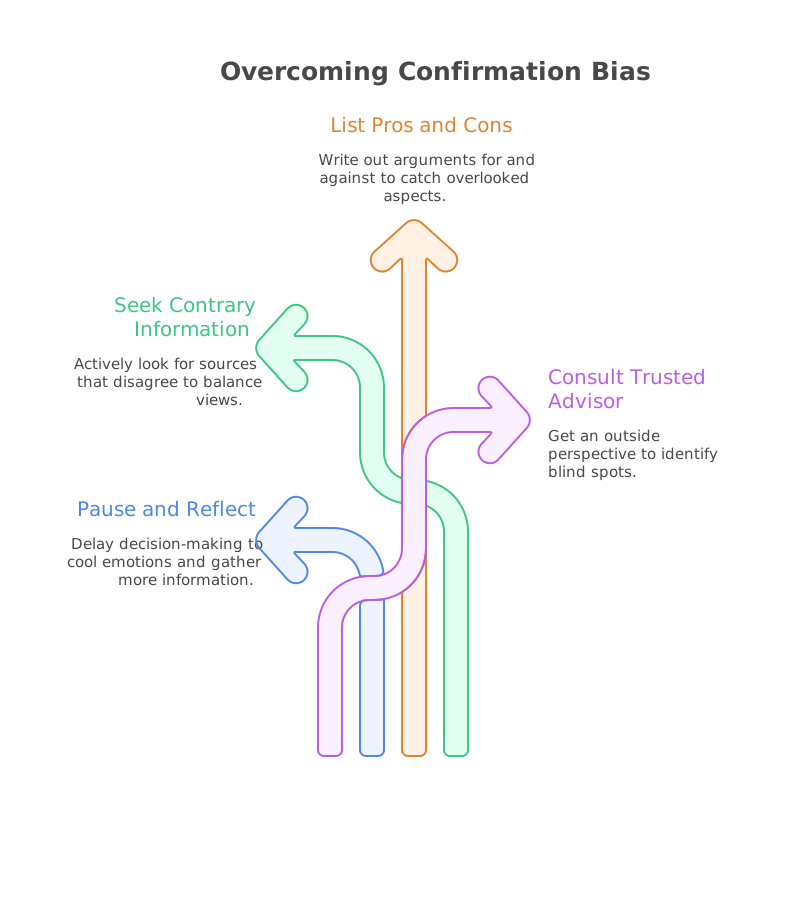
Pause and Reflect Before Deciding
When you feel excited or anxious to make a decision – be it an investment move or a big purchase – give yourself a breather. Delay your decision-making process just a bit. This could mean sleeping on it or waiting a few days. Taking time helps you cool off initial emotions and allows more information to surface. Simply put, slowing down prevents your first impression from completely taking over.
Seek Out Contrary Information
Make it a habit to play devil’s advocate with your own ideas. If you only read sources that agree with you, actively look for reputable sources that disagree. For example, say you’re about to buy a particular stock because five sources say it’s great. Try to find a well-reasoned article that argues why it might not be. If you’re excited about purchasing a certain car, go read the 1-star and 2-star reviews, not just the glowing 5-star ones. In finance, this might mean asking, “What could go wrong?” and genuinely seeking the answer. It can feel strange at first – after all, we naturally prefer positive feedback. But hearing the other side of the story gives you a more balanced view.
List the Pros and Cons
This is an old trick but a good one. Writing out a simple pros-and-cons list for an investment or purchase can break the spell of one-sided thinking. Actually seeing the arguments for and against, side by side, helps you catch whether you’re ignoring something important. If you struggle to list any “cons” on your own, try asking a friend to help think of potential downsides.
Consult a Trusted Advisor or Friend
Sometimes an outside perspective makes all the difference. Talk to someone you trust who isn’t afraid to be honest with you. This could be a financially savvy friend, a mentor, or a professional advisor. Explain your reasoning, and then invite them to poke holes in it. Often, we are too close to our own decisions. A neutral party can spot blind spots that we miss, and do so quickly. The idea isn’t to let others decide for you, but to make sure you’ve considered viewpoints beyond your own.
By practicing these strategies, you train yourself to think more critically. Over time, you’ll become more comfortable with information that challenges your views. You’ll start seeing it not as a threat, but as a learning opportunity. Remember, being wrong sometimes is inevitable. What matters is catching it quickly, before a small mistake becomes a big one.
Conclusion
Confirmation bias is a powerful force, but it doesn’t have to control your decisions. We all love feeling like we’re right, and our brains will gladly serve up evidence to keep that feeling going. In areas like investing, however, that cozy echo chamber of agreeable information can lead us astray. The key takeaway is to stay curious and a bit skeptical – especially about your own opinions. When you make an important choice, pause and ask yourself a simple question. “Am I seeing the whole picture, or just the part that makes me comfortable?”
Being aware of confirmation bias is half the battle won. It brings a healthy dose of humility to our decision-making. In finance and in life, that can be the difference between just feeling right and actually being right in the long run.