
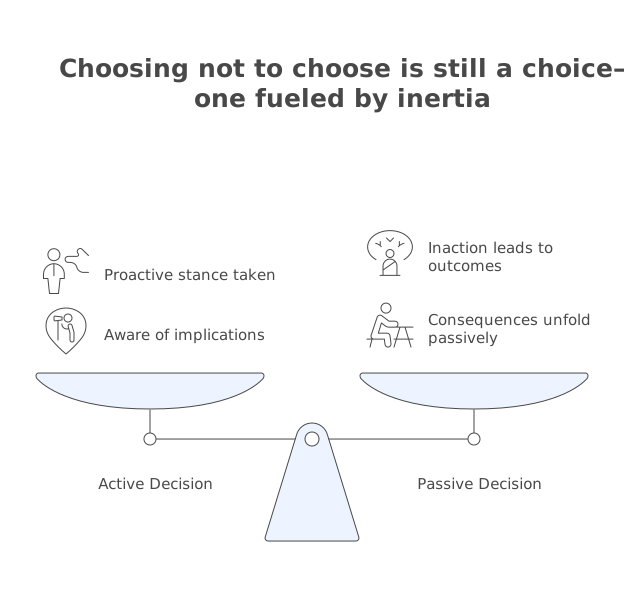
Many bright, accomplished people find themselves caught in financial inertia—that quiet drift of doing nothing when action is needed. Even highly educated professionals—doctors, engineers, PhDs, entrepreneurs—sometimes delay important money decisions. This isn’t about laziness or a lack of intelligence. It’s simply human nature to cling to the status quo, especially when the topic feels complex or uncertain. In personal finance, this inertia—a blend of procrastination and avoiding decisions—can feel safe in the moment. But beneath that comfort, it often hides real, long-term costs that quietly erode opportunity and security.
Picture a heavy boulder resting on a hill. In physics, an object at rest stays that way until something moves it. Your money works much the same way—without a deliberate push, it tends to remain exactly where it is.
Doing nothing often feels easier than confronting big financial choices. We tell ourselves we’ll “get to it later” or cling to familiar habits. Meanwhile, weeks turn into years, and opportunity quietly slips away.
This tendency, known as financial inertia, can limit your ability to grow, protect, and enjoy wealth over time. In the sections ahead, we’ll look at what financial inertia really is, why smart, capable people often fall into it, how it can erode long‑term potential, and most importantly, practical steps to break free—so your money works as intentionally and effectively as you do.

What Is Financial Inertia?
Financial inertia is the tendency to do nothing or keep things exactly as they are, even when change could help. Psychologists call this status quo bias—a built‑in preference for the familiar and a resistance to action. In everyday terms, it’s the habit of delaying or avoiding financial decisions simply because staying put feels easier. You’ve likely seen this in your own life: leaving savings in cash for years because you “never got around to investing.” While comfort in familiarity is natural, unchecked inertia can quietly cost you opportunities. Recognizing it is the first step toward making thoughtful, intentional progress with your money.
This inertia often shows up as quiet complacency. You might:
- put off updating an investment portfolio
- delay signing up for a retirement plan
- ignore that nagging reminder to buy insurance.
Why? Because doing nothing is the path of least resistance. Maintaining the familiar course feels safe. However, staying on autopilot can come at a cost, which we’ll discuss later.
But first, let’s unpack why inertia happens. Humans aren’t irrational for hesitating – there are psychological reasons we cling to the status quo. Understanding these reasons is the first step to breaking free.
Why We Stick to the Status Quo
Fear of Regret and Change
Change invites uncertainty. Many people subconsciously fear that if they make a new move with their money, it could be the “wrong” move. By doing nothing, we avoid the risk of regret. We tend to feel more regret over bad outcomes from actions we took than from bad outcomes caused by inaction. We won’t blame ourselves as much if things go wrong when we didn’t actively choose a change. This fear of the unknown and potential regret feeds our status quo bias, keeping us frozen in place. The familiar path might not be perfect, but at least it’s predictable. As a result, we often avoid anything that might rock the boat—even when that boat is quietly taking on water.
Comfort in the Familiar
Our minds are naturally drawn to comfort and routine. You’ve worked hard to build your life—it’s normal to prefer the familiar. Sticking with what you know can feel like control, even protection. If nothing changes, nothing can “go wrong,” or so we tell ourselves.
This is a common emotional bias—favoring the known over the new, even when change might lead to better results. For example, you might hold onto an underperforming investment or an outdated savings approach simply because it’s familiar. It’s the classic “if it isn’t broken, don’t fix it” mindset.
The truth is, in finance, something can appear fine yet still be far from optimal. Familiarity is powerful, and breaking that pattern takes effort.
Overwhelmed by Choices
Ever sat down at a restaurant, opened the menu, and instantly felt overwhelmed? Money decisions can feel the same way. Choosing between investment options, insurance policies, or retirement plans can be exhausting—especially when every choice feels complex. Psychologists call this decision paralysis—when the weight of too many choices makes us avoid choosing at all.
Instead of reviewing alternatives or making changes, we postpone. We default to what’s familiar, even if it’s not ideal. Research shows that when faced with a dizzying list of investment options, many people stick with the default. In real life, this might mean actions such as leaving excess cash in a low-interest accounts.
When confusion meets complexity, inertia wins.
Filing important decisions under “later” often becomes “never.” The cost isn’t just missed opportunities—it’s lost momentum toward your bigger goals.
Living in the Now (Present Bias)
One of the quiet forces keeping us stuck is our tendency to live in the now. We’re wired to prefer immediate comfort or rewards over future benefits—a mental shortcut psychologists call present bias. Managing money often demands short-term effort:
- creating a budget
- saving consistently
- learning about investments, etc. in exchange for long-term rewards.
No wonder procrastination slips in. It’s easy to think, “I’ll review my 401(k) next month” or “I’ll invest when work slows down.” Meanwhile, something less demanding takes priority. For busy professionals, postponing financial steps feels justifiable—there’s always an urgent meeting, patient, project, or trip. But this short-term mindset fuels inertia.
In reality, avoiding a little discomfort today comes at the expense of your future self. As research on retirement savings shows, delaying increases the risk of missed growth opportunities. “Later” often feels easier than “now”—and that’s exactly why nothing changes.

By recognizing these drivers – fear, comfort, overwhelm, and present-focused thinking – we can start to see why inertia is so common. It’s essentially human. The trouble is that while we sit in neutral, life keeps moving. Next, let’s look at what staying on the sidelines can cost us over time.
The Hidden Cost of Doing Nothing
Remaining financially still can feel safe—even wise—in the moment. If nothing changes, nothing can go wrong… or so it seems. Yet doing nothing is still a choice: it’s deciding to keep your money on its current path, whether or not that path serves you. Over months and years, this quiet inaction can slowly erode the wealth and future you’ve worked so hard to build. What feels like avoiding risk may, in fact, be creating it. Here are a few ways sticking with the status quo can hurt:
Missed Growth Opportunities
Inertia can mean missing out on potential growth. A classic example is keeping large amounts of cash in a checking or savings account for years because you never got around to investing it. The result is that your money earns little to nothing, losing ground to inflation and forfeiting the magic of compounding. Those “later” investments that never happen are lost opportunities – years when your money could have been working for you. The cost isn’t immediately visible, but it accumulates. You may end up with a far smaller nest egg than if you had invested appropriately. Similarly, failing to adjust your investments over time can hurt. If inertia keeps you in an outdated portfolio (say, too much in one stock or sitting in a low-risk fund through your 30s), you might be forgoing better returns or proper diversification. The bottom line: doing nothing might feel safe, but it often carries an opportunity cost. Your wealth may grow much slower – or not at all – compared to if you took prudent action.
Delayed (or Derailed) Financial Goals
Procrastination has a quiet way of gaining momentum. The longer you put off a financial goal, the more ground you’ll need to make up later. In some cases, you may never fully close the gap. Each year of delay makes the climb a lot more steeper!
Many people in their 40s or 50s suddenly realize they’ve set aside far too little—not because they couldn’t save earlier, but because inertia kept them on the sidelines in their 20s and 30s. The myth of “plenty of time later” is dangerous, robbing you of the one thing money can’t buy: time for compounding—the snowball effect of earnings generating more earnings.
Inertia doesn’t only cost money; it can trigger last-minute scrambles. Rushing to fund college, pay off debt, or get retirement-ready often means more stress and fewer choices. Worse, some goals get completely derailed. Skip updating your insurance or estate plan, and an unexpected event can create financial havoc that smart, early planning could have prevented.
In short: waiting on important financial moves doesn’t just slow progress—it can push you further behind, making the destination harder, if not impossible, to reach.
Staying with Suboptimal Choices
Inertia doesn’t just prevent new actions — it can quietly lock us into outdated or poor decisions. It’s easy to “set and forget” things like banks, service providers, or even financial advisors. Automation works well for certain investments. However, it can be harmful if you never check whether your choice is still your best option. For instance, you may keep a bank account with low interest and high charges because switching feels inconvenient. The same is true for portfolios left unbalanced over time — your mix of stocks, bonds, and other assets (i.e., your asset allocation) might no longer fit your age, goals, or risk comfort.
By not making an active decision, you’re still making one — just often a costly or risky one. Over years, that comfort with the familiar can erode your financial wellbeing.
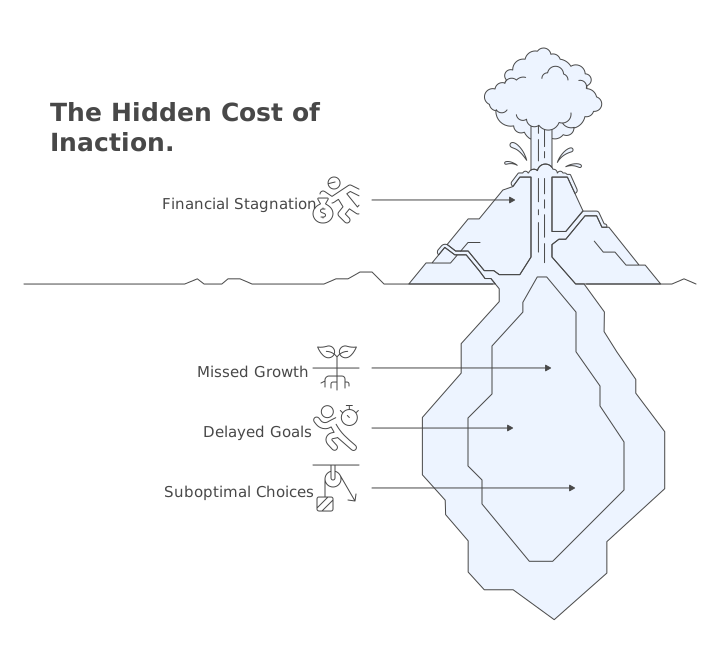
In summary, inertia can be a silent wealth killer. It’s easy to underestimate the cost of “nothing changed” because the effects are often invisible until much later. But savvy observers note that standing still can be just as risky as moving forward – you just don’t feel it immediately. The good news? Once you recognize inertia’s costs, you can take steps to protect yourself. Breaking out of inertia doesn’t require drastic leaps; even small nudges can set positive change in motion. In the next section, we’ll look at how to get things moving in a comfortable, sustainable way.
Overcoming Financial Inertia: Getting Unstuck
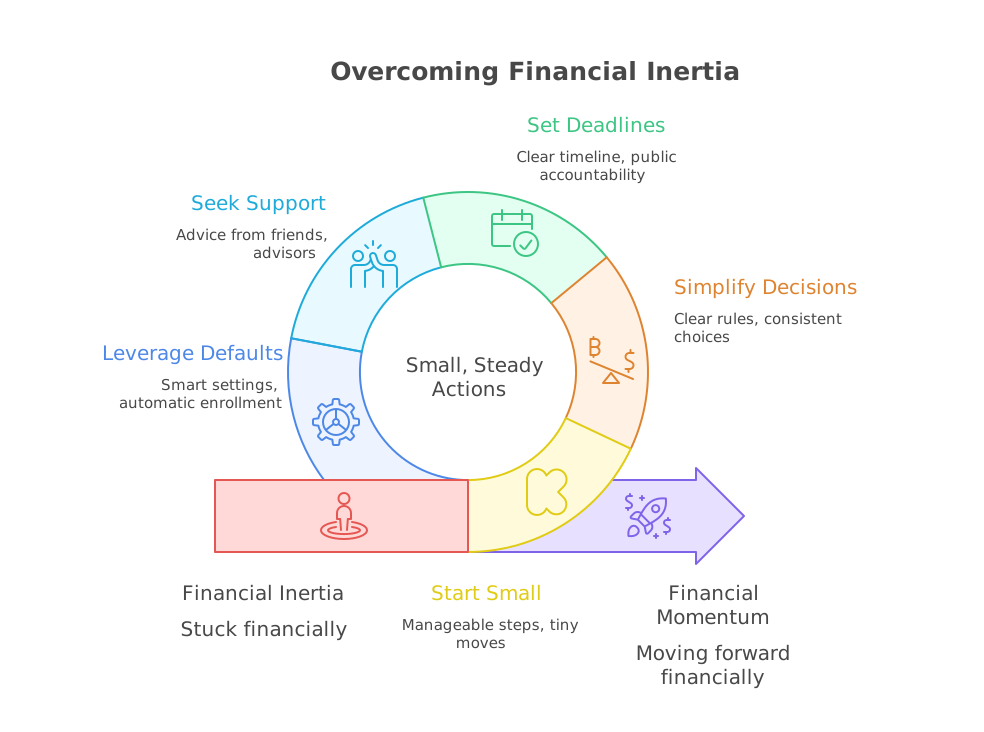
The other side of inertia is momentum. Once something is moving, it takes far less effort to keep it going. The hardest part is often that first push—overcoming hesitation or the habit of putting things off. In personal finance, that can mean facing decisions you’ve delayed or taking the first step toward a plan. The good news? You don’t need an overnight transformation. Small, steady actions can spark confidence and turn inertia into your ally. With the right starting moves—your “default settings”—momentum begins to work in your favor. Here’s how to start shifting your financial life out of neutral and into forward motion.
Start with Small Steps
Big projects feel far less daunting when you break them into small, manageable steps. If you’ve been putting off a financial task, begin with just one tiny move. For example, instead of overhauling your entire financial plan—an intimidating goal—try something simple, like setting up a modest automatic transfer from each paycheck into an investment account.
Automation is a quiet but powerful ally. Once set, it works on autopilot, keeping your progress going without extra effort. As behavioral economists Cass Sunstein and Richard Thaler note, our natural “default settings” can be used for good—automation turns inertia into a positive force. Set bills, savings, or investments to run automatically, so even passive moments move you forward.
You might also schedule a single, non‑negotiable hour to review your finances, as you would a doctor’s appointment. Each small win builds momentum—step by step, procrastination loses its hold.
Simplify Decision-Making
Complex decisions often lead to delays. To break the cycle, start by simplifying how you make financial choices. Clear, consistent rules remove the need to debate every decision. For example, commit to investing a set percentage of your income each month—no exceptions. This turns action into a habit, not a question.
Too many options can stall progress. Narrow them. Instead of analyzing dozens of investments, consider a basic three-fund portfolio. The goal isn’t perfection—it’s taking a reasonable, timely step forward.
If you tend to overanalyze, set firm boundaries:
- limit your research to a few choices or a set amount of time.
- Lean on simple guidelines such as “save 20%” or “keep six months’ expenses in reserve.”
Reducing complexity cuts mental friction. Done is better than perfect—and the simpler the path, the faster you’ll move ahead.
Set Checkpoints and Deadlines
One reason financial inertia is so common is that there’s rarely an immediate deadline. No one is chasing you to update your will, review your investments, or choose a new insurance plan. Without a clear timeline, “later” can quietly become never. The solution? Set your own deadlines. Decide, for example, that by the end of this month you’ll finalize your insurance choice. Put it in your calendar like any other important meeting.
Public accountability helps too. Tell your spouse or a friend, “I’m refinancing my student loan by next week.” Knowing someone else expects a result adds gentle, motivating pressure.
Finally, schedule a recurring financial check‑up—yearly or quarterly works for most people. Treat it like routine maintenance. These checkpoints keep tasks from disappearing off your radar. They turn overwhelming projects into small, manageable steps that build long-term momentum.
Get an Outside Force (Advice and Support)
In physics, an object at rest needs an external force to get moving. In your financial life, that outside force can be people. Seeking support—whether from a financially savvy friend or a trusted advisor—can help you overcome inertia. A skilled financial advisor can spot where you’re stuck, offer clear next steps, and keep you accountable. When you know someone will follow up, you’re far more likely to follow through.
Accountability doesn’t have to be formal. An “accountability buddy”—a partner, friend, or family member—can be just as effective. Share specific goals (“I’ll consolidate my old retirement accounts this month”) and have them check in. The goal is to avoid that uncomfortable “not yet” answer.
Education can also spark momentum. A personal finance course or insightful book may inspire action. The takeaway: don’t fight inertia alone. Like a personal trainer for your money, the right guidance can get you moving—and keep you going.
Leverage Positive Defaults
Make inertia work for you by building smart default settings into your finances. This goes beyond simple automation—it means structuring things so that doing nothing still keeps you on track. For example, many employers automatically enroll workers into retirement plans like a 401(k). Why? Because people rarely opt out, and participation soars when saving is the default.
You can use the same principle. Set your mortgage or savings to auto-increase each year, so your contributions grow without extra effort. Use tools that enable automatic rebalancing in your investments so your portfolio adjusts itself. Even small tweaks—like routing part of every paycheck directly to savings—make not saving the harder choice.
You might also set “windfall rules,” such as automatically directing 50% of any bonus or tax refund into investments. By pre-deciding these actions, your money follows guided rails toward your goals—keeping you moving forward, even on autopilot.
Conclusion
Newton’s first law tells us that objects in motion stay in motion. The hardest part is simply getting started. Once you take that first step, the next one feels easier. Each positive action builds confidence, replacing bad inertia—staying stuck—with good inertia—staying on a smart financial track without constant effort.
Financial inertia can quietly keep you in the same place for years. Doing nothing often feels safe, but it’s usually the most expensive choice in the long run. If you’ve been putting off a financial decision or avoiding your portfolio, know this: it’s a common human bias, not a personal flaw. The cure is action—any action. Open that account. Move that money. Automate that transfer. Small steps break the stalemate and get you moving in the right direction.
You don’t need perfect timing or flawless plans. Wealth grows from momentum, time, and good habits, not from hesitation. Every year you wait can cost more than you think decades from now. You can adjust your course anytime, but you can’t win a race you never start. The best time to get your money working was years ago. The next best time—is today.