
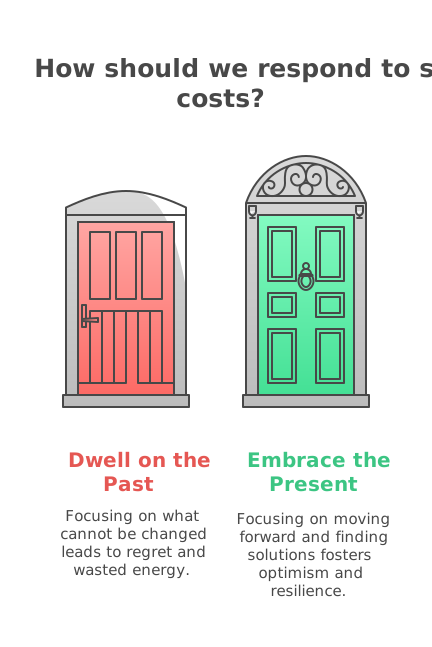
You’ve probably heard the saying, “no use crying over spilled milk.” Once it’s on the floor, no amount of regret will put it back in the glass. Let us explore the concept of a “sunk cost”
Life—especially when it comes to money—is full of moments that don’t go as planned. The secret is learning to look forward, not back. By focusing on the next step, you free yourself from hesitation or regret and make decisions with clarity.
Yet even the smartest among us fall into the same trap. A physician might keep funding a struggling practice. An engineer might hold a faltering investment far too long. Why? It’s human nature to cling to what we’ve already invested—our time, money, or energy—even when it can’t be recovered. This is the sunk cost fallacy at work. Let us break it down, share and reveal how to spot—and stop—it before it costs you more.
What Is The Sunk Cost Fallacy?
The sunk cost fallacy is a common mental trap that keeps us tied to losing investments. A “sunk cost” is just that: spent and unrecoverable. Rationally, these past costs shouldn’t influence our choices moving forward. Emotionally, however, they weigh heavily, tempting us to ask, “We’ve come this far… shouldn’t we finish?”
This bias shifts our focus from current value to past investment, often leading to poor decisions. Picture this: you buy a pricey, non-refundable movie ticket, but feel sick on the big night. Instead of resting, you go—miserable—because you don’t want the money “wasted.” That’s the sunk cost fallacy at work.
The truth? What’s spent is gone. More effort won’t bring it back. Sometimes the wisest move—and the hardest—is to let go and move forward.

Why Do We Cling To Sunk Costs?
Knowing about the sunk cost trap is one thing; avoiding it is another. Why are we so vulnerable to it? The answer lies in how our minds work. We dislike losses far more than we enjoy gains—a bias psychologists call loss aversion. We also tend to overvalue what’s already ours, simply because it’s ours. This is the endowment effect.
Together, these tendencies make us hold on to investments, projects, or even relationships well past their logical end. Pride and ego can deepen the grip. For high achievers, admitting a misstep can feel like admitting defeat. Instead, we may double down—continuing to invest time, money, or energy to “prove” we were right. Psychologists call this escalation of commitment.
Breaking free requires self-awareness and the humility to accept that walking away isn’t failure! That is the first step toward better decisions.
Loss Aversion: When Fear Of Loss Guides Us
Loss aversion is the deep-rooted fear of losing that can quietly steer our decisions.
This bias can lead to puzzling choices. An investor might hold a sinking stock — not out of belief in recovery, but to avoid “locking in” the loss. By waiting, they cling to hope, however slim, that the stock might rebound. Ironically, this often turns small losses into much bigger ones.
Loss aversion also fuels the sunk cost fallacy—valuing what we’ve already spent more than the reality ahead. The fear of feeling “all this was for nothing” can overpower reason. Spotting this bias lets you focus on future potential, not past pain. A powerful test: If I hadn’t already invested so much, what would I do now?
The Endowment Effect: Overvaluing What’s “Ours”
Have you ever noticed how something feels more valuable simply because you own it? That’s the endowment effect—a mental bias where ownership inflates our perception of worth.
Pride and Commitment: The Ego’s Role
Pride is a powerful force—and it can quietly keep us stuck in the sunk cost trap. Quitting can feel like admitting failure, which is especially tough for high achievers like physicians, engineers, and entrepreneurs who are used to winning. When an investment falters, walking away may feel like a personal defeat. So, we often double down, convincing ourselves that a bit more time, effort, or money will turn things around. This is the classic “throwing good money after bad”—fueled as much by ego as by hope.
Confirmation Bias
We all face confirmation bias! Once we make a decision, our minds instinctively look for proof we were right and overlook signs we were wrong. When we add public commitments—sharing our plans with friends, colleagues, or family—the pressure to stay the course grows even stronger. However, note that it often takes more courage to say, “This isn’t working,” than to push forward just for the sake of it. Recognizing when to change direction is not weakness—it’s wisdom. It protects your time, safeguards your resources, and keeps you moving toward what truly matters.

Everyday Sunk Cost Traps
The sunk cost fallacy isn’t just something that trips up investors or big companies—it shows up in everyday life, too. These mental traps can be surprisingly subtle, but learning to spot them builds clarity and confidence in your choices. Let’s explore a couple of familiar situations where you might feel irrationally committed—not because it’s the best option now, but because of what you’ve already put in.
The Expensive Meal That Didn’t Taste Right
Imagine you drive a long distance to try a famously pricey restaurant. You pay a hefty sum for a gourmet dinner. Halfway through the meal, you realize it’s just not to your taste – in fact, you hate it. What do you do? Most people in this situation will force themselves to finish the unsavory meal, thinking “I’ve paid so much and traveled so far; I can’t let it go to waste.” In reality, the money and time are already gone (sunk costs). Eating food you don’t enjoy won’t bring them back; it will only give you a stomach ache. This is a classic example of the sunk cost fallacy .
The rational choice would be to cut your losses – stop eating, maybe chalk it up to experience and grab a sandwich on the way home. But our aversion to waste makes that simple choice surprisingly hard.
We see this pattern in smaller ways too: finishing a boring movie because you rented it, or wearing an uncomfortable expensive outfit just because you bought it. The impulse to “get your money’s worth” can lead you to misery, all because the cost is sunk. Recognizing this feeling in the moment can help you smile and say, “Well, lesson learned,” and walk away without that extra bite (or byte).
The Money Pit Car
Your friend buys a gorgeous, high-end car he adores. Two years later, trouble starts. Every few months, something major breaks. Each repair costs thousands. The pattern repeats until the total repairs outweigh the car’s actual value.
When you suggest selling, he refuses. “I’ve already spent so much. Selling now means all that money was wasted. Plus, it’s my baby!” Sunk cost fallacy and endowment effect at work!
We’ve all been there—maybe with a fixer-upper home, a never-ending renovation, or a costly hobby. The more you’ve invested, the harder it feels to let go. But here’s the truth: past spending is gone. If the asset drains more than it’s worth, freeing yourself—emotionally and financially—opens the door to far better opportunities. Sometimes the smartest move is to walk away.
Sunk Cost Fallacy In Investing And Business
When it comes to managing wealth, the sunk cost fallacy can quietly drain fortunes. This bias leads people to keep investing in something failing. The harm builds over time, turning small mistakes into major losses.
Consider this: you invest heavily in a startup or fund you didn’t fully understand. Months later, the numbers make it clear—it’s underperforming, with little hope of recovery. A clear-headed move would be to sell and redirect the money into better opportunities. But under the spell of sunk costs, you think, “I can’t pull out now—I’ve put too much into this.” This “hold and hope” approach rarely works. The discomfort of selling makes the loss real, and overconfidence convinces you a turnaround is just ahead.
Professionals often recommend this simple test: If you wouldn’t buy it today, don’t keep it simply because you already own it.
The Concorde Jet Project
This trap isn’t just limited to personal investing or individuals. Entire nations have fallen prey. The Concorde jet project is a famous example. Britain and France poured billions into its development. Even after costs exploded and profitability looked impossible, funding continued. Leaders feared “wasting” what was already spent. In the end, the Concorde flew—at a massive loss.
Whether it’s a global project or your stock portfolio, the principle is the same: don’t let past spending dictate future decisions. Treat each choice as if you were starting fresh. Look forward, not backward. That discipline—though emotionally challenging—is key to protecting and growing wealth with clarity and confidence.
A Doctor’s Dilemma
Consider the story of a respected surgeon, “Dr. Break Even” who opened his own medical practice. He invested heavily, sparing no cost on equipment, décor, and staff. The first year brought fewer patients than expected, and the clinic barely broke even. In year two, a larger competitor moved in nearby, drawing away even more business. Losses mounted.
Instead of reassessing, he doubled down – taking out loans for advertising, hiring more staff, and adding services. Yet the core problems – strong competition and high overhead – persisted. Debt grew, stress mounted, and closing felt impossible. Why?
He was caught in the sunk cost fallacy—believing he had invested too much to quit. Loss aversion made him fear turning paper losses into real ones. The endowment effect led him to overvalue the clinic simply because it was his creation. Pride and the need to protect his identity as a high achiever fueled an escalation of commitment: “I didn’t come this far to stop now.”
This isn’t a tale of foolishness—it’s a reflection of how being human intersects with money decisions. The very traits that made him an exceptional surgeon—confidence, tenacity, deep personal investment—became weaknesses in business! The longer he held on, the more his financial position eroded.
The lesson? Everyone is vulnerable to these biases if we don’t pause, seek outside perspective, and make hard decisions early. Sometimes the wisest move isn’t to try harder—it’s to stop. Better to pull the plug today than lose even more tomorrow.
Overcoming The Sunk Cost Fallacy
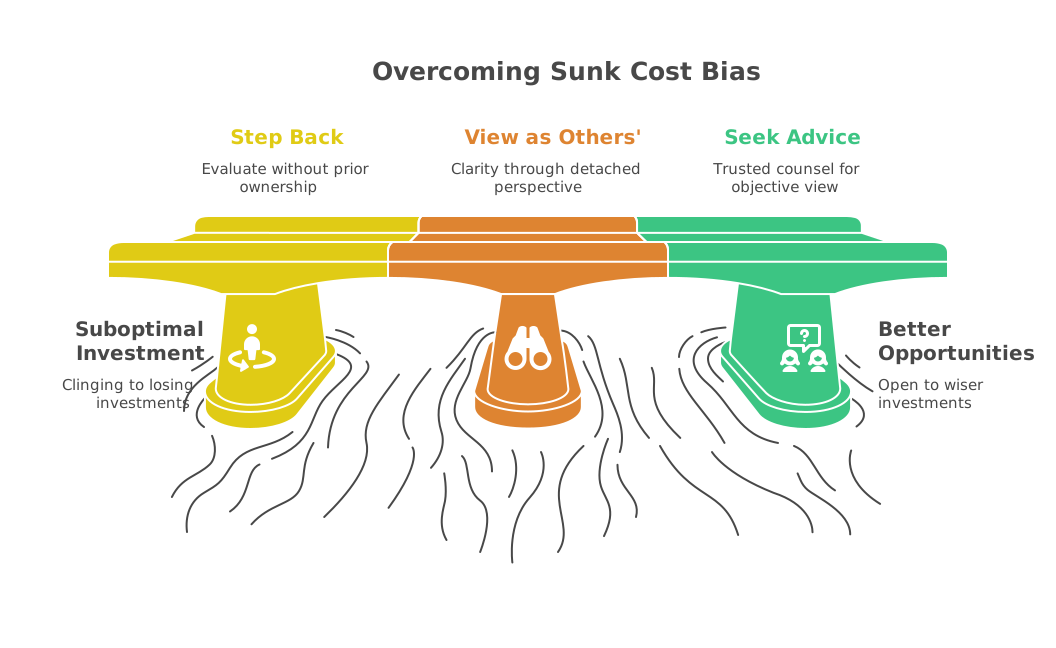
In investing, this bias can quietly erode returns. We might cling to a suboptimal investment not because they’re wise holdings, but because “I already own it.” Entrepreneurs face the same trap, overvaluing a company or project they’ve built from scratch, even when the market disagrees.
Paired with the sunk cost fallacy, the endowment effect can blind us to better opportunities. Awareness is the antidote:
- step back, ask yourself, “Would I buy this today, if I didn’t already own it?”
- view your holdings as if they belonged to someone else—clarity often follows.
- Seek advice from a trusted friend/ advisor.
Passion Gives Purpose
There’s a subtle but important twist to the sunk cost fallacy. Not every decision to continue is about salvaging money or pride—sometimes, it’s about joy. If something brings you deep satisfaction, it can be entirely reasonable to keep going, even if the financial return is modest. Think of building a personal art studio or pursuing a music project. On paper, it may look like “throwing good money after bad,” but if the process itself gives you meaning, growth, or happiness, it’s not a trap—it’s a choice.
What deserves caution is pouring time, money, or energy into something that drains you—only because you’ve already invested in it. That’s when the sunk cost fallacy does its damage. If an activity truly enriches your life today, its cost isn’t just in dollars—it’s weighed against fulfillment. Real value lives in how it shapes your experiences, strengthens your relationships, and sparks joy. In that light, spending becomes less about loss and more about investing in the life you want now. The return isn’t purely financial—it’s the memories, meaning, and satisfaction you carry forward. The key question: Does it add genuine value today—not just the hope of redeeming yesterday’s effort?

Conclusion: Letting Go and Moving Forward
The sunk cost fallacy is our tendency to keep investing in something—money, time, or energy—simply because we’ve already invested so much. It’s a deeply human impulse, driven by loss aversion (the pain of giving up), emotional attachment, and even pride. We don’t just commit resources; we commit pieces of ourselves. That’s what makes walking away so hard.
Yet holding on to a bad investment—financial or otherwise—often causes more harm than good. Awareness is the first step to breaking free. Next time you think, “I’ve come this far…”, pause and ask, “If I were starting fresh, what would I do?” The past is sunk—nothing will bring it back. What matters is how you move forward.
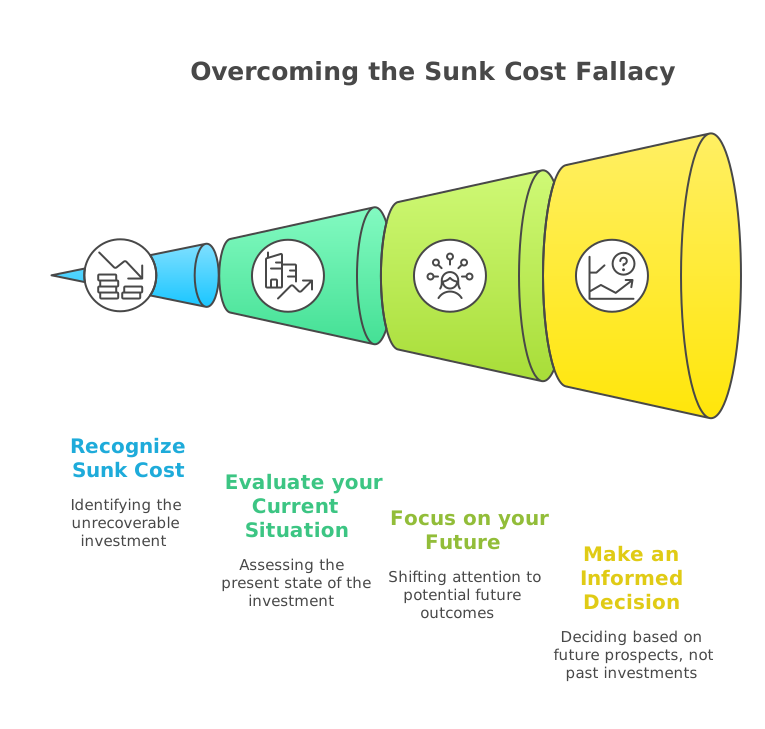
True prosperity comes from reallocating your resources—capital, time, and focus—toward opportunities with genuine potential. Letting go isn’t failure. It’s wisdom, and it’s often the quiet hallmark of lasting success.