
Imagine hearing about a plane crash on the news and suddenly feeling nervous about your upcoming flight. Logically, you know air travel is safe, but that vivid news story makes the risk feel much higher. This is a classic example of availability bias in action – a mental shortcut where our brains give more weight to information that’s easily recalled or recently seen . In investing, availability bias can quietly steer the smartest minds off course. When decisions are based on the most available information or memorable experiences instead of objective facts, our investor psychology can lead us astray.
Let’s explore what availability bias is, how it can distort your financial decisions, and the practical steps you can take to overcome it. Approach this with an open mind—and leave those misleading mental shortcuts behind!
No matter your level of education or success, a lack of financial familiarity can leave you vulnerable to mental blind spots. Even highly accomplished professionals—entrepreneurs, physicians, engineers, and PhDs—can fall prey to cognitive biases like availability bias when making money decisions. This isn’t a reflection of your intelligence; it’s a powerful reminder that awareness is your greatest tool. Recognizing these biases is the first step toward making smarter, more confident choices with your wealth.
What is Availability Bias?
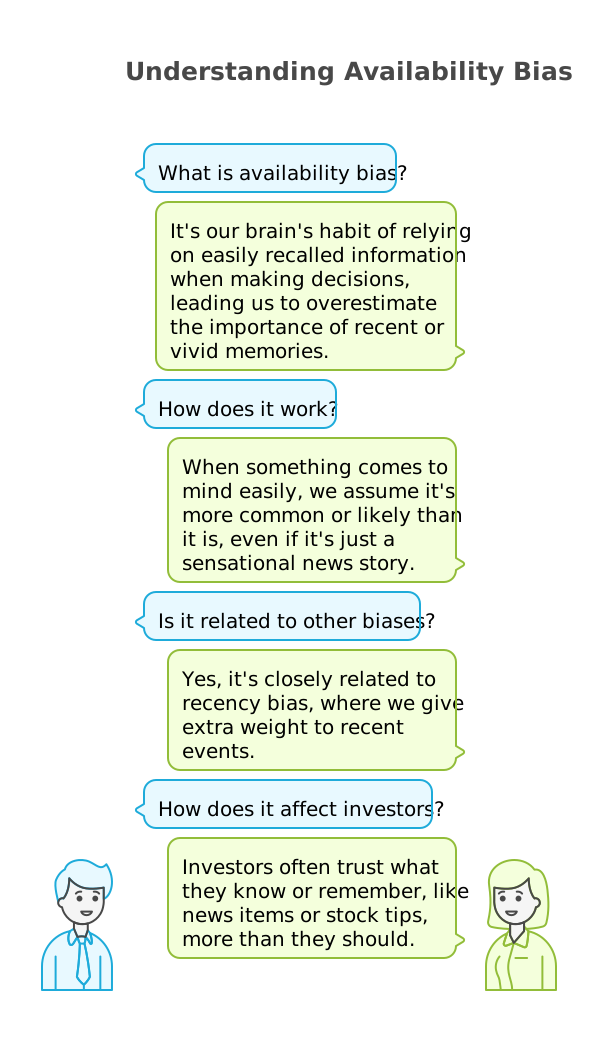
At its core, availability bias is our brain’s habit of leaning on information that comes to mind quickly and easily. We tend to use whatever examples pop into our heads when making decisions. Psychologists Daniel Kahneman and Amos Tversky first described this availability heuristic as a cognitive shortcut. Instead of painstakingly analyzing all data, we rely on immediate examples or memories to judge what might happen next. It’s one of many ingrained biases hardwired into our thinking. The result? We often overestimate the importance or likelihood of things we’ve recently seen or vividly remember, while undervaluing other relevant facts that aren’t as obvious.
Put simply, when something comes to mind easily, we tend to assume it’s more common or likely than it really is. A sensational news story or a vivid personal experience can stick with us, but that doesn’t make it the most probable outcome. This mental shortcut, known as a bias, can lead to errors in judgment because ease of recall doesn’t match actual odds or importance. For example, after hearing about a highly publicized lottery win, people may feel their own chances have improved and buy more tickets. In reality, the odds haven’t changed—it just feels more possible because the story is fresh in our minds.
Availability bias is just one type of behavioral bias that can cloud judgment. It’s closely related to recency bias, where we give extra weight to the most recent events . Both stem from the same mental quirk: our brains love a good story and fresh memories. But those instincts don’t always lead to logical investing decisions. In the context of investor psychology, availability bias often means we trust what we know or remember. The news item, the stock tip, the anecdote – these can weigh more in our minds than they should.
Everyday Examples: How Our Minds Trick Us
Availability bias isn’t just a finance phenomenon – it affects everyday life. Consider our earlier example of fearing a plane ride after seeing a plane crash on TV. Statistically, driving a car is far riskier than flying. But vivid plane crash images stick in our memory and skew our perception of danger. Our brains latch onto the dramatic story we remember, even if it’s a rare event.
Another common example is fear of shark attacks. After a high-profile shark attack is reported, beachgoers often avoid swimming due to an inflated sense of risk. In reality, shark attacks are extremely rare – only a handful occur worldwide each year . Nonetheless, the shocking news makes that danger feel far more probable. People might recall a friend’s bad restaurant experience and decide the whole place is terrible. They ignore dozens of good reviews that aren’t as memorable. These examples show how easily availability bias can warp our judgment in daily decisions.
Availability Bias in Investing: Why Memory Can Mislead Money
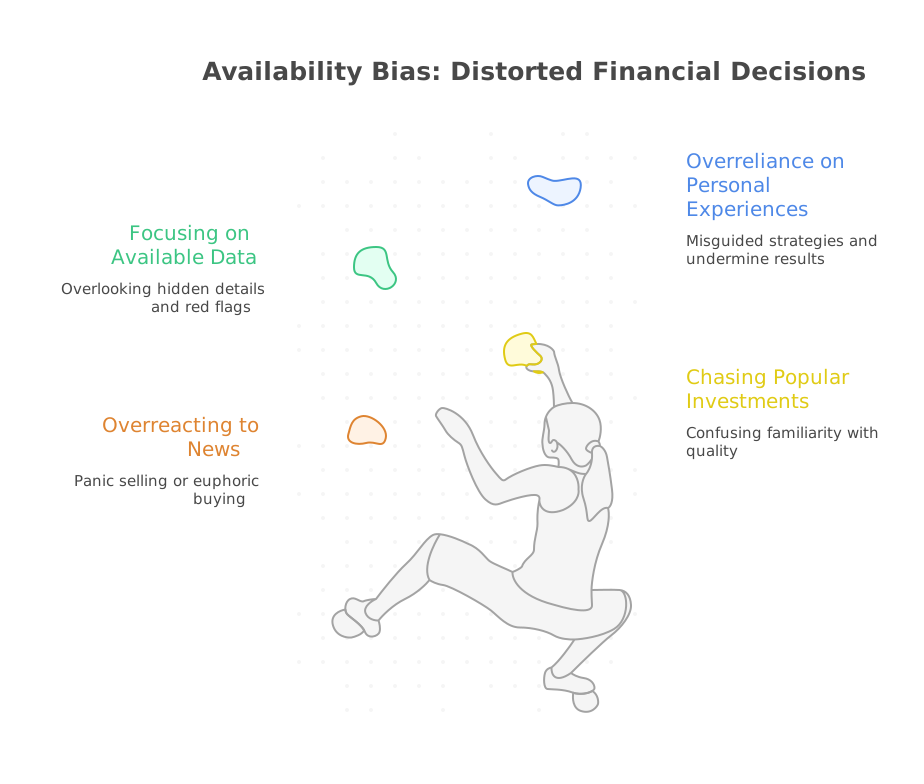
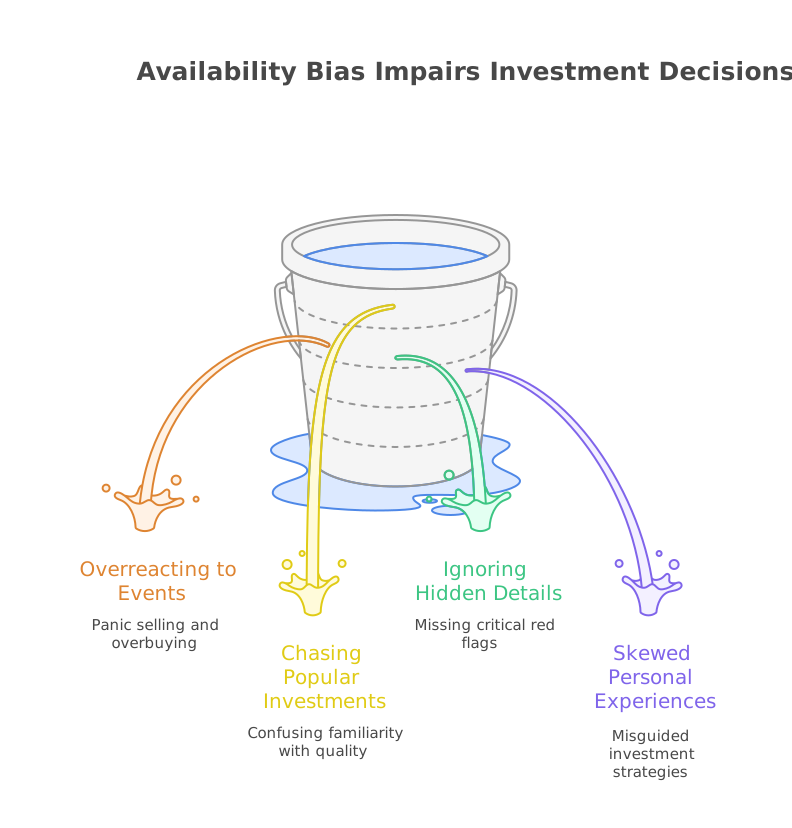
When it comes to your money, availability bias can have real financial consequences. Investor behavior is often driven by what’s in the news, what friends talk about, or personal experiences. These influences can outweigh balanced analysis. Availability bias can affect investors’ decisions in a few major ways:
Overreacting to Recent Market Events
Investors frequently overweight the latest news or market movements, assuming that whatever just happened will keep happening . If stocks plunge this week, an investor with availability bias might believe a crash is coming. They could sell off everything in a panic. On the flip side, after a streak of market gains, an investor might throw caution aside. They may buy more stocks assuming the rally will never end. In reality, short-term events are often just noise. But because a market crash or boom is fresh in memory, it looms large in decision-making. This can lead to panic-selling in bear markets or overenthusiastic buying during bubbles. The outcome is usually suboptimal- You end up selling low out of fear, or buying high from euphoria. And it happens because recent events felt more important than they actually were.
Chasing Familiar and Popular Investments
Another clear sign of availability bias is investing in companies or funds simply because their names keep popping up. Maybe everyone at the office is buzzing about a trendy new tech stock, so it’s top of mind. Or perhaps you’ve seen endless ads for a mutual fund and assume it must be a smart pick. This bias can lead investors to confuse familiarity with quality, putting too much money into what’s in the news or on TV. But popularity doesn’t equal performance — a strong media presence may be carefully cultivated, and may not be a reflection of real value. By chasing the well-known, you risk missing out on better but quieter opportunities, leaving your portfolio less diversified and potentially weaker overall.
Focusing on Available Data and Ignoring the Hidden Details
Availability bias can lead investors to base decisions solely on what’s easy to find, while overlooking what’s less visible. For instance, when researching a stock, you might focus on the glossy annual report and upbeat news coverage—positive, public-facing information—and stop there. Yet important details may be buried in footnotes or obscure filings that few ever read. Because many companies naturally showcase their best news up front and tuck any negatives deep in the fine print, relying only on readily available facts can cause you to miss critical red flags.
As the saying goes, “What everyone knows is rarely worth knowing in investing.” When information is widely available, it’s usually already reflected in a stock’s price. The real edge comes from uncovering insights beyond the headlines. Relying only on obvious data can breed overconfidence—and that often leads to unwelcome surprises down the road.
Letting Personal Experiences Skew Your Strategy
Our own past experiences – especially the dramatic ones – can heavily influence how we invest. If you or someone close to you lost money during a major market downturn, you might become overly conservative for years afterward . The memory of that pain is easily available in your mind, so you assume extreme losses are more likely than they truly are. Conversely, if your first years of investing were during a roaring bull market, you might downplay risks. You could start believing big gains are practically guaranteed. For example, many investors burned by the 2008 mortgage crisis avoided anything related to housing or mortgages for years afterward. But the next market bubble or downturn often comes from a different area entirely . By fixating on the last disaster, they risked missing out on gains – or failing to spot new risks that didn’t resemble the last crisis.
These biases can drive misguided strategies—whether it’s avoiding stocks entirely out of fear or taking on excessive risk due to overconfidence. In both situations, the mental shortcut of drawing sweeping conclusions from a single memorable experience can seriously undermine your long-term results.
Why Do We Fall for Availability Bias?
If availability bias is so misleading, why do our intelligent brains keep falling for it? The answer lies in the way human thinking has evolved. Our minds operate in two modes: a fast, automatic mode and a slow, analytical one. Nobel laureate Daniel Kahneman calls these System 1 — impulsive and emotional — and System 2 — deliberate and logical. Availability bias thrives in the quick, intuitive realm of System 1, where the brain rapidly matches patterns based on whatever comes to mind first. This skill once helped our ancestors respond instantly to danger, but in today’s complex world of modern finance, it can just as easily steer us in the wrong direction.
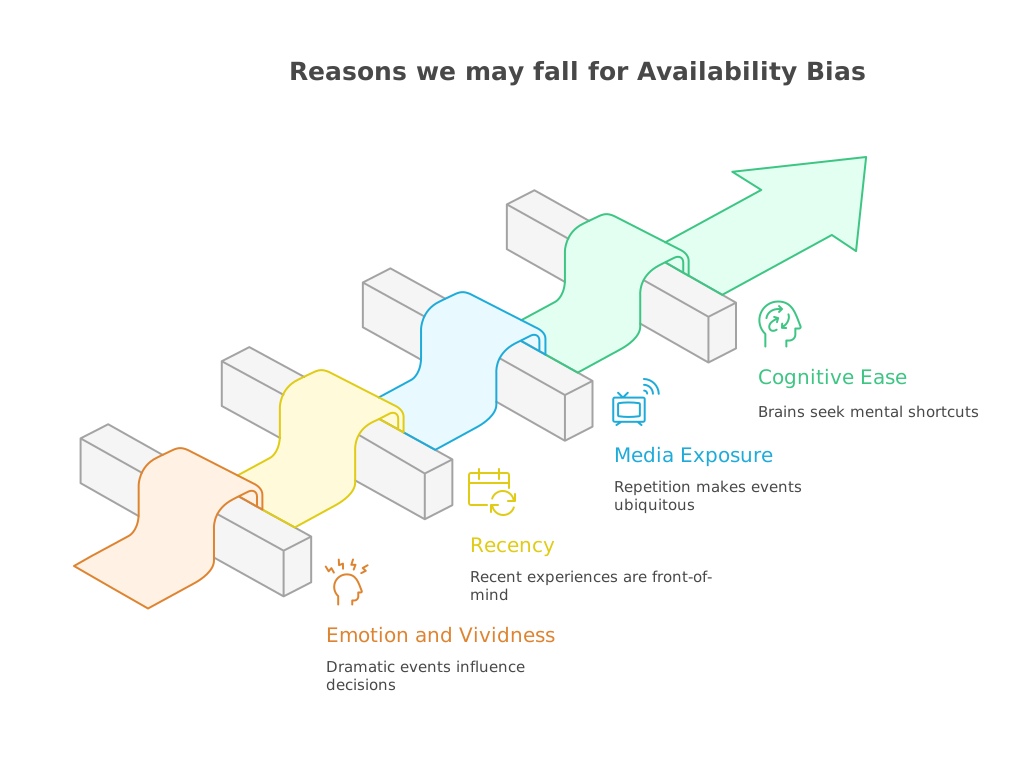
So why do we rely on this shortcut? Here are a few reasons:
Emotion and Vividness:
Dramatic events stick with us emotionally, and emotions influence decision-making. A frightening market crash or an exciting stock boom comes with strong feelings that embed in memory.
Recency:
Recent experiences are front-of-mind. We weight them more because they haven’t faded yet- Last year’s news feels more relevant than historical patterns from decades ago.
Media Exposure:
Media repetition makes an event feel ubiquitous. You start thinking, “everyone’s talking about it, so it must be common.” That misconception fuels availability bias.
Cognitive Ease:
Quite simply, it’s easier. Our brains naturally seek shortcuts to conserve energy, and it requires far less mental effort to recall a familiar example than to dig into base rates or analyze raw data. We instinctively follow the path of least resistance—a path that availability bias readily supplies.
Understanding these causes can help you spot when your mind is drifting into the availability trap. It’s a natural part of investor psychology, not a personal failing. The good news is that once you’re aware of it, you can take steps to engage your slower, rational thinking side when it matters most.
How to Avoid Availability Bias in Your Investments
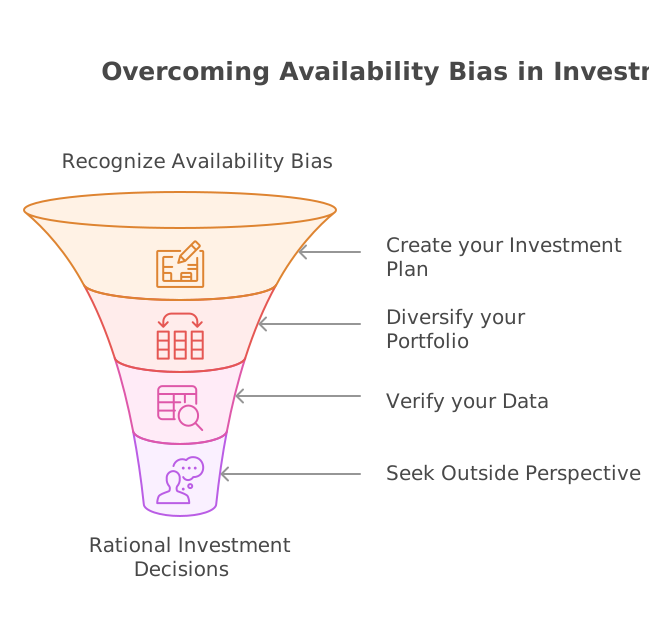
Awareness is the first step in combating availability bias. Once you recognize this bias in yourself, you can start taking concrete steps to counteract it. Consider these strategies to ensure your aaaadecisions are sound rather than reflexive:
Have a Plan and Stick to It:
Create your investment plan—including asset allocation, risk tolerance, and long-term goals—when you’re thinking clearly. Pre-commit to following that plan, even when markets turn volatile. By deciding in advance how much risk you’re comfortable with and when to rebalance, you’ll be better equipped to stay the course and avoid reacting to the latest headline or market swing. Automation can be a powerful ally—for example, setting up automatic monthly investments so you stay consistent and confident, no matter what the news brings.
Diversify and Think Long-Term:
A well-diversified portfolio acts as a powerful buffer against bias. By spreading your investments across different assets and sectors, you avoid putting all your confidence—and capital—into the story of the moment. Diversification can help ensure that no single piece of flashy news, whether positive or negative, can derail your overall progress. It also reinforces a long-term mindset, reminding you that you’re in the market for years, even decades, and that short‑term noise should never dictate your strategy.
Verify the Data (Look Beyond the Headlines):
Before taking action, dig a little deeper. If a risk or opportunity is getting a lot of attention, look beyond the hype and seek out real data. Assess how likely and significant it truly is. By grounding your choices in facts and broad evidence, you avoid being swayed by a single dramatic story. In other words, engage your System 2 thinking. Ask yourself: Is this genuinely common or important, or simply in the spotlight right now?
Get an Outside Perspective:
Sometimes our own experiences and social circles can unintentionally create an echo chamber. Seeking input from a financial advisor—or even a well-informed friend—can offer a valuable reality check. They might uncover insights you haven’t considered or challenge assumptions shaped by availability bias. The aim isn’t to have someone tell you what to do, but to ensure you’re not operating in a bubble of limited impressions. An outside perspective can reveal blind spots and help keep your thinking clear, balanced, and objective.
By implementing these practices, you gradually train yourself to make more rational, evidence-based decisions. You’ll still feel the pull of emotional news and salient stories – we all do. But you’ll be better equipped to pause, zoom out, and make choices aligned with your true financial goals, rather than fleeting impulses.
Conclusion
Being human means we’re far from perfectly rational machines. We often rely on mental shortcuts—like availability bias—to make sense of a complex world, usually without even noticing. In investing, however, these shortcuts can quietly steer us off course, prompting us to remember the spectacular but overlook the subtle. The takeaway is simple: awareness and a disciplined process are powerful tools against bias. When you catch yourself leaning on what’s most vivid or recent, pause, gather more facts, and realign with your long-term plan.
Overcoming availability bias—and other cognitive traps—is a vital step toward becoming a stronger, more thoughtful investor. It won’t happen overnight, but each time you catch yourself thinking, “This stock is everywhere in the news, so it must be great,” take a moment to pause and dig deeper. Every bit of extra homework helps tilt the odds in your favor. Stay curious, stay disciplined, and remember: the best investing is often boring—and that’s a good thing. By refusing to let flashy headlines or vivid memories dictate your moves, you give yourself the strongest chance of reaching your long-term financial goals.
After all, knowledge is power – especially when it’s the self-knowledge to recognize your own biases and keep them in check.