

What would you do if money were no object?
Many accomplished professionals and entrepreneurs eventually wrestle with this question. Years of hard work have built remarkable careers and steady incomes, yet personal finances often receive only occasional attention. It’s understandable—balancing work, family, and life leaves little room for money management.
The irony? A few focused hours spent shaping a clear financial strategy can open the door to extraordinary results. Over time, that clarity and planning could create gains in the seven figures. That is far more than what an extra shift, contract, or side venture could deliver.
When the blueprint is right, your money can work harder than you do!
In this first installment, we’ll explore the fundamentals of building wealth. These straightforward, proven principles can help you grow and protect your finances. We’ll examine:
- Why even accomplished professionals sometimes make costly mistakes
- how human instincts can work against us in investing, and
- what truly drives lasting financial success.
The goal is to equip you with a practical, science-backed game plan that respects both your intelligence and your time. Let’s get started, shall we!
Why Your Wealth Needs Your Attention (Even If You’re Successful)
If you’re a doctor, entrepreneur, or other high-income professional, it’s natural to question whether personal finance truly needs your focus. You’ve worked hard, achieved success, and built an impressive income. But wealth doesn’t manage itself—and ignoring it can quietly erode what you’ve earned. On top of everything else, there’s the very real concern that the odds can stack up surprisingly fast. The obvious question- what exactly are these concerns?
Late Start to High Earnings
Many professionals don’t reach substantial earnings until around age 30 (and so have lost time when money could compound). They often carry six-figure student debt from medical or graduate school. Their highest earning years may span only a few decades. Much of that income is taxed in the higher brackets. That means every year matters. Simply put, time is not on your side. The sooner you take control of your money, the more freedom, flexibility, and security you can build for the years ahead.
Lack of formal Training
Many high-net-worth individuals have little to no formal training in finance. Medical, law, and engineering programs rarely cover how markets work or how to manage a portfolio, yet suddenly you’re navigating a world where a substantial income attracts endless streams of financial “advice”—not all of it trustworthy.
Changing Landscape and Vulnerability
Professionals often become targets for costly investment schemes or salespeople whose interests may not align with theirs. The landscape has also shifted dramatically from a generation ago: the era of guaranteed pensions is largely gone. Today, retirement security depends on your own investing skills—managing 401(k)s, IRAs, and other self-directed plans. The responsibility for funding a comfortable retirement now rests squarely on your shoulders.
Limited Time to take advantage of certain perks
Because earnings start late, there is only a finite window in which they can maximize contributions to tax-advantaged accounts such as Individual Retirement Accounts (IRAs) and 401(k) plans. These accounts offer valuable benefits like tax-deferred growth or, in the case of Roth accounts, tax-free withdrawals. Any additional savings must be directed into taxable investment accounts. Unlike retirement accounts, taxable accounts do not provide special tax sheltering. Dividends, interest, and realized capital gains may trigger tax liabilities in the year they are earned.

In summary, even extremely smart and busy people need to prioritize their personal finances. It’s not just about clipping coupons or dabbling in the stock market – it’s about ensuring that the years of hard work translate into lasting financial freedom. Spending a bit of time to craft a solid financial strategy is like preventive care for your wealth (something any physician can appreciate). As one physician quipped, many colleagues will moonlight for $2,000 in a weekend – so why not spend a few hours on your finances when the payoff could be 100x greater over the long run ?
From Evidence-Based Professional to Evidence-Based Investor
High-achieving professionals are no strangers to evidence-based thinking. In medicine, for example, you rely on peer-reviewed research and randomized trials to make decisions . You don’t prescribe treatments just because of a hunch or a slick TV ad – you demand data and proven outcomes. Engineers and entrepreneurs likewise use prototypes, A/B tests, and empirical evidence when stakes are high. We trust the scientific method and understand that one anecdote or gut feeling doesn’t outweigh years of data .
Yet when it comes to investing, even the most logical professionals often leave their evidence-based mindset at the door. Instead of acting like a researcher, it’s all too easy to behave like a fortune-teller. We’ve spoken with countless physicians and executives who invest by instinct, making moves based on personal opinions or industry “feel.” For example, a doctor might pour money into healthcare stocks because they feel “I know the field, so I can pick winners there” even if no data confirms that expertise translates to outperformance . Or an entrepreneur might sit on cash because “the market feels overvalued and due for a drop.” Of course, everyone is entitled to an opinion on the market’s direction . But the crucial question is: does your opinion help you make better investment decisions?
Can most investors beat the average market returns?
The evidence says no. Markets are largely unpredictable in the short run, and even finance professionals and fund managers struggle to consistently beat simple index funds. In fact, over a 10-year period, most of professional fund managers underperformed the S&P 500 index. This striking statistic shows how tough it is to outguess the market. If the brightest minds on Wall Street can’t reliably time markets or pick winning stocks, it’s doubtful that your or my “hunches” will fare much better.
Data shows that common behavioral mistakes come with a real price. Research, including studies by Dalbar Associates, reveals that the average individual investor consistently underperforms market indices—largely due to poor timing decisions like buying at highs and selling at lows. Even professional fund managers often fare no better, with most failing to beat simple index benchmarks over the long term. The lesson is clear: successful investing is simple, but not instinctive. It demands the discipline to resist gut reactions and the hype of the headlines.
Academic research strongly supports a more systematic, evidence-based approach to investing – one that emphasizes diversification, long-term planning, and data over gut feelings.
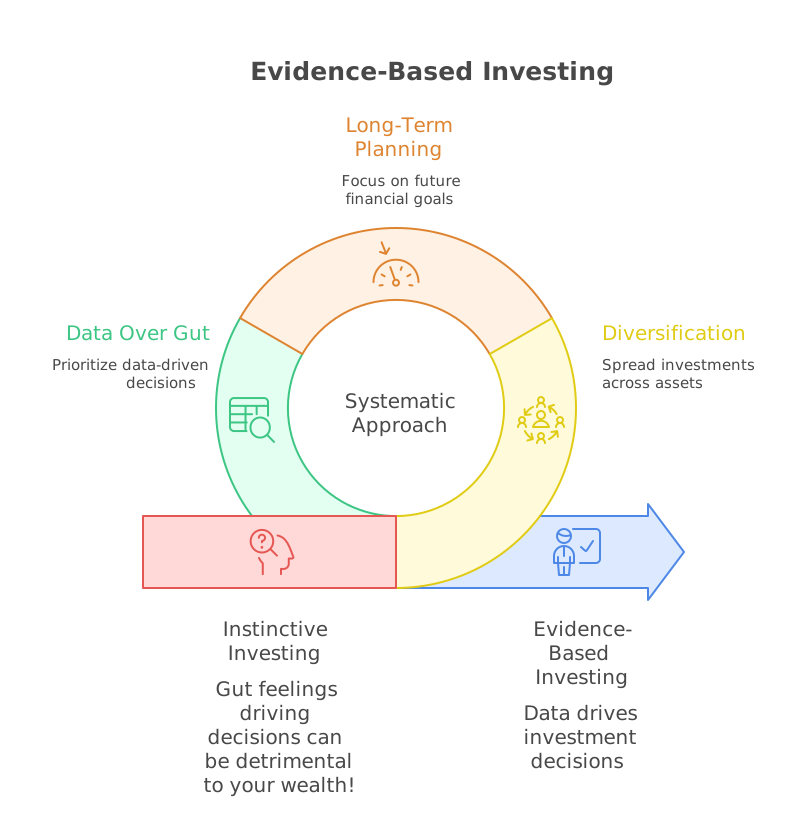
What Does a good Investment Philosophy mean?
It means building a plan on evidence, not hearsay. It means accepting that markets involve randomness and uncertainty, and resisting the temptation to see patterns where none exist. Just because a stock market index has risen for five years straight doesn’t mean the sixth year will do the same. Think of it like flipping a coin: landing on heads five times in a row doesn’t make tails “due” on the next flip. Each outcome is independent of the last. Past streaks don’t promise future results — in investing, as in life, patterns can break without warning.
It also means staying alert to conflicts of interest. In medicine, you might view a pharmaceutical rep’s pitch with healthy skepticism. The same applies to financial guidance—especially when the person offering it profits from your choices. Worse is when you don’t know how you are paying (when the advice comes “free.”) In those cases, the real cost can be hidden in the recommendations themselves. Thoughtful planning begins with asking: Who benefits most from this advice—you, or the person giving it?
If you’re not paying for the product, you are the product!
– Andrew Lewis
Bottom line: Bring the same rigor to your personal finances that you bring to your profession. Combine your analytical skills with the wealth of financial research available. Understand that if something sounds too good to be true, it probably is! By treating investing as a discipline – one that can be studied and improved – you’ll be less prone to costly mistakes and more likely to reach your goals.
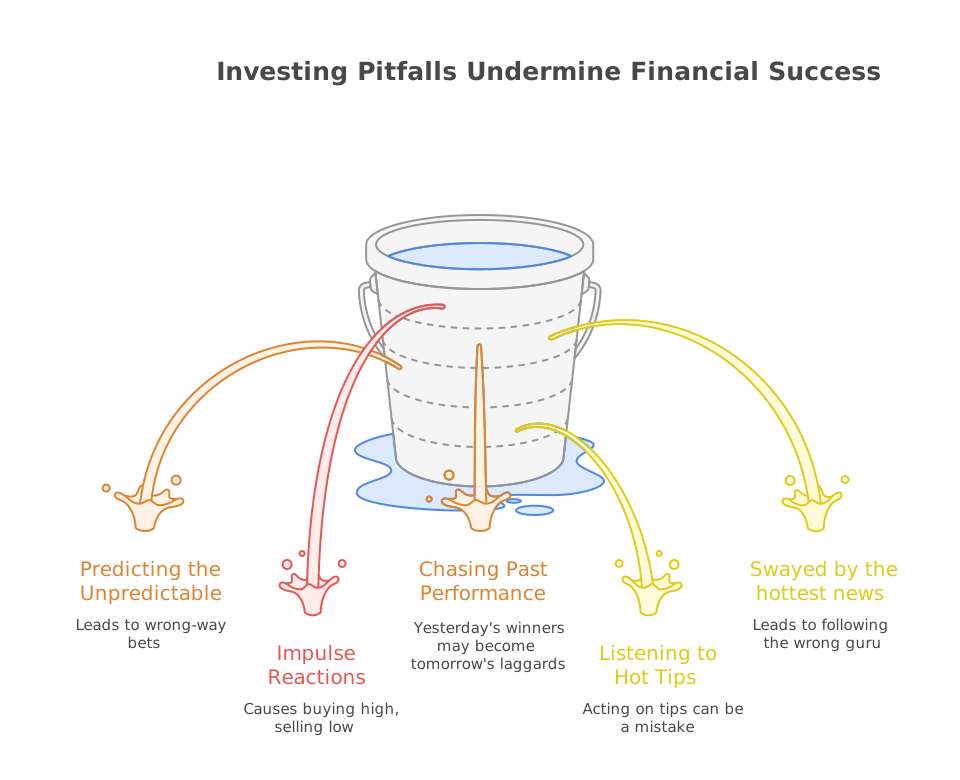
Common Investing Pitfalls (Even Smart People Fall For These)
Despite their intelligence, many high-net-worth individuals fall prey to classic investing pitfalls. Our brains are wired in ways that often work against us in financial markets. Recognizing these traps is the first step to avoiding them. Do any of these sound familiar?
Predicting the Unpredictable
Whether it’s “I have a system to pick winning stocks” or “Tech stocks will boom next year,” many investors act like weather forecasters – often with little success . In reality, consistently predicting short-term market moves or the next hot sector is nearly impossible. Acting on unproven predictions can lead to wrong-way bets.
Impulsive reactions to market swings
In moments of market stress, our fight-or-flight instinct kicks in. Remember 2008? 2020? When portfolios plunged, plenty of folks panicked and sold everything at the bottom. Conversely, when markets are euphoric, fear of missing out (FOMO) leads people to jump in at peaks. As one saying goes, “It stinks to not make money – but it stinks even more when your friends are getting rich and you’re not”. That envy can tempt you to buy whatever your buddy bragged about over dinner . Impulsive moves driven by fear or greed often backfire, causing you to sell low and buy high.
Chasing Past Performance
It’s common to choose investments by looking in the rear-view mirror – e.g. picking the mutual fund that had the highest return in the last year or five years . Unfortunately, yesterday’s winners can easily become tomorrow’s laggards. There’s a reason every fund ad disclaims that “past performance does not predict future results.” Switching to whatever’s hot now usually just means you’re late to the party.
Listening to hot tips and media noise
We’re awash in financial news and opinions. One minute the news says buy, the next article says sell. A neighbor or colleague mentions a “can’t-miss” investment (crypto, anyone?). It’s human nature to seek shortcuts and insider info, but acting on tips or headlines is often a mistake. Public information is public – if you heard it, so did millions of others, meaning it’s likely already baked into prices. And truly insider information? If it’s real and not public, trading on it is illegal. Don’t let sensational magazine covers or charismatic gurus dictate your strategy – by the time news is out, it’s usually too late to trade on .
Being Swayed by Expert Disagreements
Ever notice how even top analysts frequently contradict each other? For every bullish forecast, there’s a bearish one. As an investor, this can be paralyzing – or worse, lead you to follow the wrong guru. Here’s a humbling truth: for every seller in the market, there’s a buyer on the other side. One of them will be wrong, but in real time you can’t be sure who . Accepting that uncertainty is part of investing will save you from chasing “expert” predictions.
Why are these Pitfalls so pernicious?
The human psyche evolved for survival on the savanna, not the stock exchange. The urge to follow the herd is hardwired into us. For our ancestors, it meant survival. In markets though, panic-selling at the first sign of trouble often locks in losses, increases taxes and interrupts the powerful effect of compounding.
Our brains dislike randomness and crave patterns. We tend to see meaning where there may be none—like spotting shapes in clouds and mistaking them for signals. This instinct can lure us into false certainty about when to buy or sell.
We’re also swayed by what’s fresh in our memory. After a few good years, it’s easy to believe the climb will continue forever. Yet history reminds us: downturns are inevitable, and preparation matters more than prediction.
How to avoid these pitfalls: Slow down and think in a long-term, disciplined way. Create a written investment plan that sets rules for how you allocate assets and when (if ever) you make changes – so you’re not swayed by every gust of emotion. Remind yourself that doing nothing is often the best course. As we’ll discuss next, focusing on controllable factors in your financial life will both improve results and calm your nerves.
Focus on What You Can Control
One of the smartest moves in wealth management (like in other facets of life) is to focus your energy on the variables you can control, rather than worrying about those you can’t. You can’t control the stock market’s daily moves, interest rate swings, or geopolitical shocks. However, High-net-worth individuals often have more control than they realize – and by maximizing those levers, you set yourself up for success regardless of market whims .
Think of it this way: a surgeon can’t control whether a patient experiences a rare complication, but she can control how thoroughly she prepares, the quality of her technique, and her adherence to best practices to reduce risks. The same applies to investing—focus on the process and the decisions within your control, trusting that a sound approach will, over time, lead to strong results.
Humility works wonders
Cultivating the humility to distinguish between success earned through disciplined effort and success influenced by luck is essential. This awareness keeps you grounded and sharpens your decision-making. For instance, securing a major deal after months of research, preparation, and strategic follow-through reflects skill and perseverance. By contrast, winning a lottery is largely luck—an opportunity worth celebrating, but one not born from your process.
When you truly examine where your real successes come from, you can double down on the habits and strategies that work consistently. Luck will sometimes step in—a surprise opportunity, a timely connection—but it’s important to recognize these for what they are: welcome, yet unpredictable moments. They’re not proof that your entire approach is flawless. By keeping this perspective, you focus on strengthening what’s reliably within your control, while still appreciating the role of chance without confusing it for skill.
What elements are controllable?
Define your why
Before you begin your financial wellness journey, take time to define what truly matters most to you—and why. This isn’t just about numbers. It’s about aligning your wealth with your values, vision, and the life you want to live. The process is a marathon, not a sprint, and having a clear reason will help you stay committed. Your “why” becomes your anchor—it keeps you focused, motivated, and confident in your decisions. Whether your goal is more freedom, security for your family, or the ability to give generously, knowing your deeper purpose greatly increases your chance of long-term success.
Boost your earnings (invest in yourself early)
Your income is the fuel for your wealth engine – the more you earn , the more you can save and invest. For many professionals and entrepreneurs, the highest ROI might come from investing in your own skills, education, and career opportunities . Whether that means gaining a specialization, growing your business, or networking to land higher-paying clients, don’t underestimate the value of human capital.
Early-career hustle and strategic skill-building can significantly increase your lifetime earnings. High income alone won’t make you rich (plenty of big earners mis-manage money), but it’s a lot easier to build wealth with a big shovel of income. Just remember to channel those earnings wisely into the next points.
Save aggressively (control your expenses)
How much you save is the number one predictor of building wealth . If you make $500K and spend $490K, you won’t get ahead. If you make $150K and consistently invest $50K of it, you’ll likely become financially independent in time. Living below your means (especially early in life so your money has time to compound) is crucial – for high earners, that often requires resisting the urge to inflate your lifestyle as your income grows.
Set an ambitious savings rate (20%, 30%, or more of income, depending on your goals) and treat it like a non-negotiable “bill” you pay to yourself first each month. By aggressively saving and investing the surplus, you put your money to work for you. Over years and decades, compound interest works its magic (assuming the markets deliver a positive return—something that can never be guaranteed, especially in the short run), turning those savings into exponentially growing wealth. (Think of each dollar saved as a seed that can grow into a tree of its own – the sooner you plant it, the larger it can grow.)
Invest wisely with an evidence-based approach
This principle encompasses many sub-choices, but the core idea is to deploy your savings into assets that will grow your wealth (ideally with evidence-backed strategies). When you have money to invest, you generally have a few choices.
Park it in cash (under the proverbial mattress or low-yield accounts)
While safe from market swings, your money is likely to lose value after inflation.
Spend it on luxuries
Buy a bigger house, a fancy car, etc. Enjoyable, perhaps, but these often cost you money in upkeep and depreciation rather than making you money.
Speculate
Bank on something like gold, crypto, or any asset hoping its price will go up – this is essentially betting on market sentiment, which can just as easily go against you.
Invest in productive, income-generating assets
For example, buy a rental property that yields rent or purchase a part of a business (stocks). You could also lend to businesses/governments (bonds), or invest in your own business ventures. These assets actually create value or cash flow, so your wealth grows as the enterprise grows.
Clearly, the last category is where most long-term wealth is built. Within that, an evidence-based investing strategy means using diversification and research-driven allocation rather than trying to pick the next unicorn stock. For instance, instead of concentrating your portfolio in a few stocks or sectors you happen to like, you might hold a broad mix of asset classes (U.S. stocks, international stocks, real estate, bonds, etc.) tailored to your goals and risk tolerance. Broad index funds or ETFs are popular vehicles since they usually deliver close to market returns at low cost.
A well-diversified Portfolio
Historically, a well-diversified portfolio held with discipline has delivered robust returns for patient investors. Even the legendary investor Warren Buffett advises that for most people, simply investing in low-cost index funds and staying the course is the smart move . Remember that time in the market beats timing the market – once you set an appropriate investment plan, stick with it through the market’s ups and downs.
Manage taxes and fees
High-net-worth individuals, in particular, need to be savvy about taxes. You can keep more of your investment returns by:
- Using tax-advantaged accounts such as an IRA or a 401k
- Maximizing employer retirement plan matches, and
- considering strategies like tax-loss harvesting or asset location (holding tax-inefficient assets in tax-sheltered accounts).
Also be mindful of investment fees and expenses – they act as a drag on your wealth. Opt for low-cost funds and be wary of products with layers of fees. Over decades, minimizing taxes and fees can mean hundreds of thousands more in your pocket.
Asset Protection
Part of controlling what you can is planning for worst-case scenarios. This means having adequate insurance – health, disability, life, liability, possibly umbrella insurance – to prevent a lawsuit or tragedy from derailing your finances. However, insurance comes with a price, and it’s important to carefully weigh its benefits against the costs. As your wealth grows, so does the need to safeguard what you’ve built. The strategies that worked when you started out may no longer offer enough protection. That’s when more complex asset protection mechanisms may need to be considered. By planning ahead, you can reduce exposure, preserve what matters, and give yourself greater peace of mind.
Estate Planning
You worked hard to build your wealth, so ensure you direct where it goes in the long run. A basic estate plan is a must for many. Many high-net-worth folks will also want to set up trusts or other vehicles to efficiently pass wealth to heirs or charities while minimizing estate taxes (when applicable). This is another aspect firmly in your control – it’s just a matter of proactive planning with qualified advisors. The peace of mind it provides is well worth the effort.
Managing Debt
It also means managing debt wisely. Not all debt is bad – a low-interest mortgage can be a lever for growth – but high-interest consumer debt is toxic. If you carry any credit card or high-rate debt, make it a priority to pay that down. Finally, approach debt and leverage with care.
Leverage—using borrowed money to invest—can be a powerful tool. When things go well, it can amplify your gains and help you grow wealth faster. But the same force that can build fortunes can also erase them quickly when markets turn. If an investment drops in value, leverage magnifies the losses, sometimes beyond the amount you invested. That’s why understanding how it works—and the risks it brings—is essential before using it.
In the right circumstances and with careful planning, leverage can help you pursue opportunities you might otherwise miss. However, it can also easily put your financial future at risk. In short: leverage is powerful, but it demands respect. Like playing with fire, it can be exciting and even rewarding, but the risk of being burned is never far away.
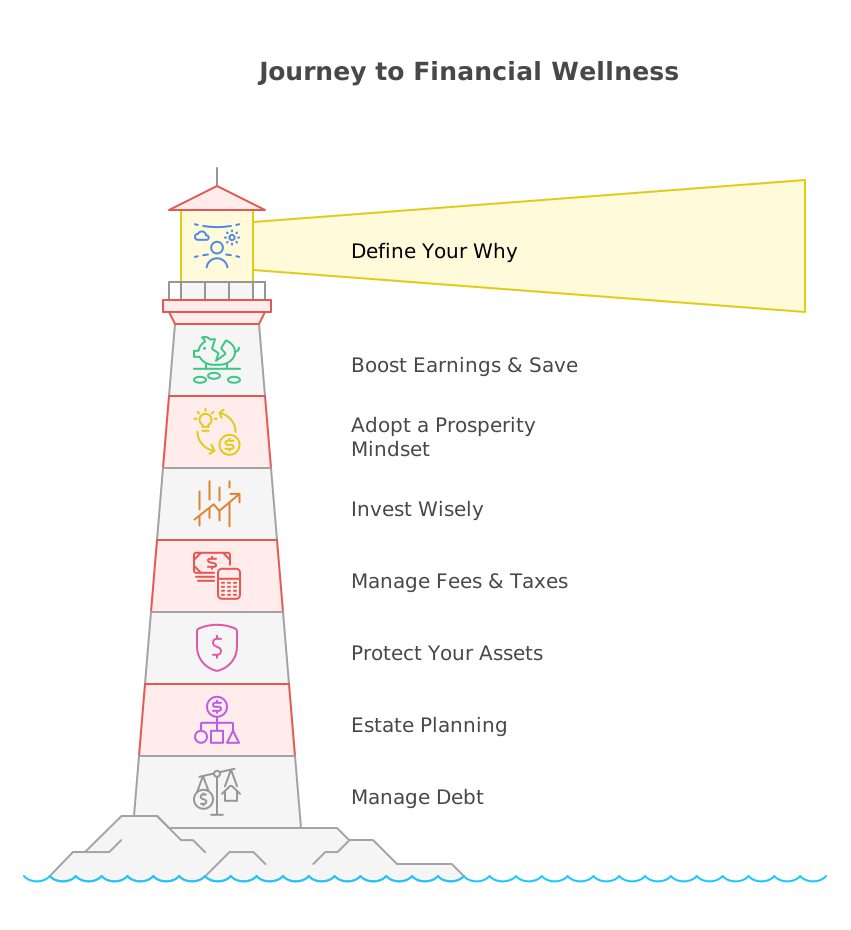
By focusing on these controllable aspects – earnings, savings rate, investment choices, costs, risk management, and planning – you create a strong foundation. You’re effectively doing for your finances what you do in your career: following best practices. The beauty is that when you handle the inputs, the outputs (net worth growth) often take care of themselves over time.
The Simple (But Not Easy) Secret to Long-Term Wealth
At this point, you might be thinking: “Okay, I get it – save diligently, invest wisely, stay patient. Easier said than done!” And you’d be right. The formula for building wealth is simple—save, invest, and let time compound—but simple doesn’t mean easy. Discipline and consistency are what turn those principles into lasting results.

Why Consistency Matters
Life and markets will test you. Downturns can make you question your plan. Booms tempt you to chase quick gains. Career shifts, family needs, or health challenges may interrupt your progress. These aren’t exceptions; they’re part of the journey. A solid strategy is built with these ups and downs in mind. If your plan is evidence-based and your habits are steady, you’ll navigate detours without losing sight of your destination.
The Real Wealth Killer
Often, it’s not markets that derail wealth but our own behavior. Selling in panic or chasing fads usually does more harm than a bad year in the market. Staying the course when others don’t is a true advantage. History shows that investors who simply held on during downturns eventually recovered and prospered—while many who sold missed the rebound. Will this always happen? may be – but the probability of success is likely better with a well implemented plan. Patience and perspective are powerful allies.
Tune Out the Noise
A long-term mindset helps you ignore daily headlines and short-term drama. Think of your portfolio like a bar of soap—the more you handle it, the smaller it gets. Constant tinkering tends to subtract value. Instead, review and rebalance on a schedule—say once a year or two—rather than reacting to every market move. It’s like planting a tree: prepare the soil, water occasionally, and let it grow. Digging it up each week only stunts progress.
Remember Your “Why”
Wealth-building isn’t about bragging rights or a scoreboard. It’s about freedom—retiring early, pursuing passion projects, or securing your family’s future. Keeping that vision in mind makes discipline easier. It also helps you celebrate milestones along the way, instead of obsessing over each market blip.
Bringing It All Together
Wealth for high-achieving professionals comes from a humble approach: control what you can, ignore what you can’t, and stay consistently invested. The math of compounding and the structure of markets will do their work if given time.
This article is the first step in our series. Ahead, we’ll dive deeper into strategies that support these core principles. For now, take one small step—whether it’s automating savings, setting a review date, or clarifying your “why.” Your future self will thank you.